All Is Number: Pythagoras and Numerology (An Encyclopedia Grimoria Volume)

When people hear the name Pythagoras today, they typically think of math class. They think, specifically of the Pythagorean theorem, which tells us that there is a geometrical relation between the three sides of a right triangle. Some may take it further and associate the name with more than one mathematical discovery, such as the existence of irrational numbers, numbers that stretch on into infinite, unrepeating decimals, like pi, or with the categorization of numbers as prime and perfect. Some may even have a sense of him as a man, a great philosopher and mathematician, an Ionian polymath from the Greek island of Samos, founder of a movement of rational thinkers who, in practicing Pythagoreanism, moved away from notions of divine influence and magic toward a more scientific view of the world, whose phenomena can be observed and described and whose laws can be demonstrated. These may also credit him with the discovery of musical harmony. But all of these may be surprised to learn that very little is known about Pythagoras for certain, that sources about him come from long after his death, and that he may not have actually been or done any of these things. Rather, there is strong reason to think of Pythagoras as nothing more than the leader of a cult. And I don’t mean that in the more ancient and traditional sense of a systematic religious belief or the formal veneration of someone, as we have spoken before about the cult of Demeter and Persephone, as practiced in the Eleusinian Mysteries, or of the cult of some Catholic saint or another. No, I mean it in the modern sense, that he was a cult leader, that he seems to have been a charismatic figure who taught unorthodox and even spurious doctrines and who gathered a significant following of adherents who believed him to be a sage. This certainly does not jibe with the notion that he and his followers spearheaded a more rational worldview based upon reason and deduction, and such a notion of Pythagoras further erodes when it is learned that the tenets of Pythagoreanism were not only centered on sound mathematical proofs. That does seem to have been an aspect of the beliefs his cult developed, but he also promulgated a decidedly mystical belief system also relating to numbers. Indeed, Pythagoreanism and its number mysticism would eventually develop into a form of magic, its practitioners believed to be capable of mystical divination. For Pythagoras was the originator of what would eventually become known as numerology.

For those of you who may be new to the podcast, I occasionally write a post on the history of magic or at least of magical beliefs, which I label as volumes of my Encyclopedia Grimoria. The most recent entry in this series was my episode on the magical lore about King Solomon, who is said to have originated certain forms of magic, such as the ritual binding of demons to do his will. A couple years before that, I completed an episode on the legendary Hermes Trismegistus, who was said to have invented alchemy. In this volume, I trace the origin of another form of magic, numerology. Some may not think of numerology as a form of magic, but in that it assigns mystical significance to otherwise natural phenomena, and then applies that mystical significance to fortunetelling and divination, it is as much a magical practice as is astrology, which I traced back, according to the lore of magic, to Zoroaster, the figure said to have invented all magic, the name of whose adherents, the magi, is where we get the word for magic. I spoke about all of this in my very first volume of the Encyclopedia Grimoria. In all of those volumes, it became increasingly clear that the legends about these magical figures were entirely unreliable, appearing much later, typically in that hotbed of syncretism and mythmaking, Hellenistic Egypt. In the case of Pythagoras, he too exists mostly in legend and myth. None of his own writings have survived. He is only known by later hagiographical and satirical writings about him—thus we know only how he was later aggrandized and lampooned. Certainly he did not invent mathematics, which was developed in Mesopotamia and Egypt before his time. Stories about his travels to the East are dubious as well, so that he may not have even been the person who brought mathematics to Greece. And there is plenty of reason to doubt whether he himself discovered anything of mathematical importance, since much of his teachings seem to be relatively standard cult teachings, about communal living and dietary restrictions and even mystical notions about the human soul. He was an early proponent of metempsychosis, the idea of the transmigration of souls, but he was not the first to have imagined it. However, whether it was Pythagoras himself or his followers, Pythagoreans can be credited with the first development of number mysticism, of assigning occult significance and qualities to numbers, a practice that evolved inevitably, through the practical application of these mystical qualities assigned to numbers, directly into numerology, or arithmancy, as it was originally called, and that name alone should indicate that it was believed to be a form of magic. And at the same time there evolved gematria, also used by Pythagoreans, which is all tied up with other mystical arts, such as kabbalism and even, as we saw in the previous episode, the modern divinatory practices involved in the Bible code. It is perhaps strange that the name of a mystic and cult leader is so closely related with modern mathematics, but we should remember also that modern chemistry originated in the practices of alchemy, diverging on a more scientific path over time. We find the same is true here, in that after Pythagoras, the principles of mathematics developed parallel to and separate from the mystical notions that Pythagoreans attached to numbers.

A 17th century engraving imagining Pythagoras.

Much like Jesus Christ, there is ample evidence that Pythagoras did exist, but little reliable information about him. We have only suspect traditions about his deeds and teachings, most recorded long after his death. Contemporaries who wrote about him certainly did not view him in a favorable light. The philosopher Heraclitus of Ephesus thought him a charlatan, calling him “the chief of swindlers,” and suggesting that his “wisdom” amounted to “artful knavery.” These, of course, are the sorts of things that might be said about a cult leader today, and most of Pythagoras’s actual teachings, as they have been transmitted to us by later writers, seem very much the sorts of ascetic controls that cult leaders place on their followers. It is claimed that new initiates were forbidden from speaking for years. He placed restrictions on clothing, specifically wool, and most especially on diet. He was a vegetarian, but more than that, it is claimed that he forbade the consumption of beans. The fact that contemporary sources about his teachings and practices are contradictory and many of the claims about him did not appear for several hundreds of years, until the Hellenistic period when his supposed doctrines were revived, makes it unclear whether he actually enforced any such restrictions. And the clearly mythical tales that also appeared make it apparent that stories about him cannot be trusted. It is said that he stopped someone from beating a dog, saying that his friend’s soul resided in the animal. That’s perfectly plausible, I suppose, given the doctrines of metempsychosis associated with him. Less believable are the stories about killing a poisonous snake that bit him by biting it himself. Impossible are the accounts of his bilocation, being in two places at one time, and ridiculous is the story that once, when he crossed a river, the river spoke aloud, greeting him with the words, “Hail Pythagoras.” Aristotle wrote that he had a golden thigh, and opposing traditions said that he was either Apollo’s son or that he even claimed to be Apollo himself. But wouldn’t it be just like a cult leader to say he’s a god? As for the notion that Pythagoras made mathematical discoveries, this too appears false. Take the Pythagorean theorem that bears his name; scholars have traced knowledge of this theorem back a thousand years before his time, to Mesopotamia, where it was widely used in Old Babylonian arithmetic. Some have then argued that Pythagoras himself brought these concepts back to Greece from his travels, but even those travels are in question, as competing traditions have him learning mathematics from Egyptian priests, from Magi in Persia or even from Zoroaster himself, from Jewish sages, from Phoenicians or Chaldeans, or even from Zeus himself in the Cave of Ida. Still other traditions had it that he arrived at his mathematical knowledge through the interpretation of his own dreams. It should be noted that some scholars do credit him as a great mathematician, and they even assert that he could have arrived at extant mathematical theorems independently. I, however, take the view expressed by Underwood Dudley, in my principal source Numerology, or What Pythagoras Wrought, that he was less a mathematician and more a mystic and cult leader. Still, it is apparent that mathematics was practiced among the followers of Pythagoras, that in fact they were central to their arcane philosophy, and the simplest explanation of any discoveries being attributed to Pythagoras is that one or more of his followers stumbled upon some proposition or mathematical truth, leading to ideas that Pythagoras encouraged and spread. Case in point, the discovery of irrational numbers is often attributed not to Pythagoras himself but to a particular Pythagorean, Hippasus of Metapontum. Eventually, Pythagoras himself gets credited with the discoveries of any Pythagorean.

One of the major discoveries thus attributed to Pythagoras himself is that of musical harmony. As the tale goes, he was walking by a smithery and was pleased by the uniform sounds of their hammers striking the anvils. However, the clang of one hammer was dissonant, so Pythagoras is said to have borrowed these hammers and conducted an elaborate experiment, involving the careful weighing of the hammers, attaching each to strings that he would pluck to produce musical notes, and the slow addition of weight to the dissonant hammer in order to bring the notes into harmony. The whole story smacks of legend. It seems unlikely that Pythagoras might convince all four blacksmiths to loan him the tools of their trade, which they surely needed to complete their work, so that he could conduct a time-consuming experiment. But regardless of whether it was really Pythagoras himself or one of his cultists who discovered harmonics simply by experimenting with a stringed instrument, which had long existed, is immaterial. What’s important is that Pythagoreanism produced music theory, and this in turn was applied to both astronomy and mathematics. In the realm of astronomy, Pythagoras seems to have taught or promoted a doctrine about the Music of the Spheres, musica universalis, that the planets resonated a kind of music. Many were the astronomical notions also dubiously attributed to Pythagoras—that he identified the evening and morning stars, which were actually identified by Babylonians more than a millennium earlier, that he was the first to identify the Earth as spherical, but scholars question this as well, as first mention of the notion didn’t appear until more than a hundred years after his death, and the first attribution of the concept to Pythagoras did not appear for several hundred years, during a time when many dubious legends about the man were appearing. What is certainly true, though, is that Pythagoras, or his adherents, do seem to have been the first to associate harmony with number, which may explain their association of harmony with the planets, since the movement of heavenly bodies had long been thought of in mathematical terms. They also discovered connections between harmonics and geometry, which led to mathematical discoveries about numbers themselves, that they could be classified as Abundant, deficient, or perfect based on the sums of their factors. I’ll spare you the mathematical details, as what’s important here is that this is where Pythagorean number mysticism originates, whether extrapolated by the Pythagoreans who discovered harmony or by others or perhaps even by Pythagoras himself, looking to turn mathematical notions into a mystical doctrine. Beyond these characteristics of numbers, they began attributing others to them. Numbers are odd or even; this we understand easily enough, as the notion is still prominent today, but Pythagoreans saw numbers as being associated with the left or the right, with light or darkness, with being in rest or in motion, being crooked or straight, male or female, good or evil. 

20th century depiction of Pythagoras and his followers, many of whom were women.

As a final illustration of how little is known with certainty about Pythagoras, even his death is in question. Tradition has it that he died with many of his followers during a politically motivated attack on their meeting place in Croton. This attack may have been motivated by Pythagoras’s failure to support a recent democratic initiative, or it may have been fomented by a certain individual who had been denied initiation into the cult, or a combination of both. It also might have been none of these, as there are no reliable accounts of the attack. Some are contradictory and may actually be describing later anti-Pythagorean attacks. Interestingly, some sources say Pythagoras wasn’t even there, or that he escaped. One story even has it that, as their meeting place burned around them, his followers lay down on the ground to create a safe path for him to get out of the building. Even the stories about his escape do not agree, however, as one claims he and other escaped followers, being denied sanctuary elsewhere, died of starvation, while another has it that after escaping, Pythagoras killed himself out of guilt, and a third claims that he escaped but ran smack into a beanfield, and since he held beans in such high esteem, apparently, he couldn’t bring himself to cross it and was thus cut down by his enemies regardless. After the suppression of his cult, the study of mathematics in Greece continued, carried on by surviving Pythagoreans and others who had never been associated with the cult. Their doctrines of number mysticism too persevered, but they disappeared for a time, not to be revived until the 1st century CE, by Neopythagoreans, a Hellenistic school of philosophy that would take Pythagorean notions about numbers to extremes. Perhaps the most famous Neopythoagorean was Apollonius of Tyana, not for his Pythagorean ideas but rather because he was long compared with Jesus Christ, such that Christ mythicists love him. Of course, those responsible for actually transmitting the legends of Pythagoras and the notions of Pythagorean number mysticism were those who left behind written works, such as Nicomachus of Gerasa, who wrote two works that now only exist as fragments, one a Life of Pythagoras and another called the Theology of Arithmetic that recorded the mystical qualities Pythagoreans believed numbers to have. Afterward, centuries later, came Neoplatonist Iamblichus, whose work of the same name further preserved and developed Pythagorean and Neopythagorean notions about numbers, though much of it appears to have been taken from the work of Nicomachus and other existing works, with the only original material resembling marginalia, like annotations that may not have even been written by Iamblichus himself.

Neopythagoreans attributed not only mystical properties to numbers, but entire personalities, transforming integers into characters like the gods of mythology. Indeed, they invented a kind of pantheon of numbers, with the number one being the supreme entity, called the monad. The monad was not even considered by them a number, since numbers must either be even or odd, which is determined by how it can be divided, and the monad cannot be divided. Since any number multiplied by the monad remains itself, which means that the monad is in all numbers, in all things and thus the origin of them. Almost as important was the dyad, or the number two, which also was differentiated from numbers in that every other number can be divided in more than one way, whereas the dyad can only be divided by itself, and results in two monads. Then the number three, the triad, had further mystical significance for them in that it has a beginning, middle, and end. And so on each numeral took on such characteristics, and then was further imbued with associations, the dyad being associated with sex and the moon, for example. Four, the tetrad, was the number of knowledge and of the world, representing the four elements and four seasons, and five, the pentad, being in the center of the nine digits (for there was no zero yet), represents balance, equality, and thus justice. So we see the mystical notions of Pythagoreans, who ironically are even today frequently praised as being scientifically minded and resistant to superstition and irrationality, evolving into an esoteric cosmology and theology. Indeed, we see Neopythagoreanism’s enormous influence on religion through Gnostic thought, which crept into early Judaic and Christian traditions in the first century CE, in which the supreme Godhead was called the Monad. Elements of Pythagorean number mysticism had already been introduced into Jewish tradition by Philo of Alexandria, and into early Christian tradition by Clement of Alexandria, and with the addition of a related practice, gematria, it would further evolve into what we today know as numerology.  

Portrait of Iamblichus

Gematria too was not original to the Pythagoreans or to Greeks, having been in use in ancient Babylon as well. The first known reference to the process of assigning number values to letters was in an 8th century BCE inscription about Assyrian king Sargon II, which declares that he had a certain wall constructed a certain length so that it corresponded with the numerical value of his name. Among the Greeks, the first use of letters to represent numbers came from Miletus and was thus known as the Milesian system. We see a definite move toward modern notions of gematria among the Pythagoreans, though, in that they used the Milesian system to practice isopsephy, taking the individual numbers associated with individual letters of names and words, adding them together and producing a sum that represents the thing the word or name refers to, which sum can then be used to draw correlations with other words and things whose names produce the same number. The isopsephic values of one through nine were assigned to the first nine letters of the Greek alphabet, followed by ten through ninety by tens for the next nine, and 100 through 900 by hundreds for the rest. This is exactly the sort of system that would be in gematric alphabets, which would be developed not only for Greek, but also for Hebrew, and eventually for English as well. Gematria was especially popular in Hebrew, in rabbinic literature, early Christian writings, and Gnostic teachings. More and more sophisticated uses of gematria would be developed in the Middle Ages in Kabbalistic literature, and some of these would remain in diluted form in modern English language gematria, which often involves adding together not only the numbers of letters, but then adding each numeral of the sum together until reaching one essential single digit that represents the word or name. Over the centuries of its use to interpret scriptures, gematria would become more and more associated with prophecy, which was, after all, mostly a matter of scriptural interpretation. Thus we see a clear line of descent from the number mysticism of Pythagoreans evolving through gematria into the realm of numerology. Perhaps the best known example of gematria used in prophecy can be found in the Book of Revelation, chapter 13, verse 18, which states, “let anyone with understanding calculate the number of the beast, for it is the number for a person. Its number is six hundred sixty-six.” Not only does this famous verse about the Number of the Beast state outright that it’s the number of a person, or man in other translations, or even the number of his name in others, making it manifestly a gematric value, but also the word translated as “calculate” or “count” in other translations actually derives from the same root as isopsephy, the ancient Greek word for gematria.

For those who want to hear more about the Number of the Beast and the potential meanings of this Bible verse, and how it has been misconstrued and misapplied by end times conspiracists throughout history, I encourage you to check out my episode from 2021, False Prophecy: The Mark of the Beast – 666. The point I want to emphasize here is that this longstanding Christian tradition of interpreting and reinterpreting Revelation to guess who the foretold Beast might be through the use of gematria essentially represents the practice of a form of magic or sorcery in the context of a religion that forbids it. There is a laundry list of verses in both the Hebrew Bible and the New Testament that explicitly prohibit practices of divination, fortune telling, and the interpretation of omens. “But is it really a form of magic?” some may protest. Prophecy is a cornerstone of these religions, so how could it be wrong to interpret it? Well that is certainly an odd contradiction, in my eyes, that a deity would forbid the prediction of the future, excluding certain acceptable examples of it. It seems to me that “interpretation of omens” is an exact description of what people are doing when they interpret prophecy through the arcane numerological practices of gematria. But I suppose that those who apply gematria to such ends can rest assured that they aren’t actually doing anything magical or supernatural, that they aren’t really divining anything, since it’s all nonsense, especially today. There are so very many gematric alphabets—some that change from single digits to tens and hundreds, some that don’t; some that start by assigning the number one to the letter A, but others starting with zero, or three or eight; some that skip multiple numbers between each letter, using all sorts of calculations so that by the time you get to Z it might be in the twenties, or the 100s, or it could be any unusual number, 276, 529, 852, or even in the many thousands, because remember that later you’ll add the digits together and reduced them to smaller numbers—with so many competing and alternative systems for calculation, you can literally make the numbers say anything, very much as we saw with the Bible Code. And considering the mathematical Law of Small Numbers, which says that there simply aren’t enough small numbers to be certain whether a seeming pattern has occurred coincidentally, it is rather meaningless to go around freaking out about some such name being reducible to sixes. I’m not a mathematician, but with if you can set up any sort of number application and calculation system that suits your ends, then it seems there is a 1 in 9 chance that any word or name can be made to output a six. Take my own name. I only need to drop it to Nathan Lloyd, rather than Nathaniel, which is what I go by really, and then use a gematria system assigning the number 45 to A, 46 to B, and so on, and I’ve Beasted myself, creating a gematric name value of 666.

Art in a 17th century manuscript of the New Testament depicting the placement of the Mark of the Beast in Greek, χξς' (666), in peoples' forehead

As we saw with the Bible Code, reading into numbers in this way, you can see find whatever it is you’re looking for. It seems to be a form of pareidolia, perceiving some meaningful image in what are really random phenomena, like seeing faces in things. One need not use a computer program to become lost in obsessive searching of the bible for hidden codes. Take the case of 19th century Russian literary critic Ivan Panin, who while reading the Gospel of John began to wonder about the presence of a certain article, the word “the,” where he felt it didn’t belong. Instead of disregarding it as an aberration of translation, which it most certainly was, he resorted to gematria, and taking the sums of words and phrases, he kept finding sevens. But just as I indicated with sixes, it is not unusual to find any one number coincidentally, and when looking for many instances of the same number, one tends to use the gematric systems and methods of calculation that will help you reach that number. It is a self-fulfilling prophecy, and that way lies madness. Ivan Panin labored over his calculations twelve hours a day for fifty years, producing a massive 40,000-page manifesto as a monument to his folly and wasted life. We saw it too in Shakespeare conspiracism and denialism, as when anti-Stratfordians got it in their heads that someone else wrote the works, the beauty and profundity of the work was ruined for them, and thereafter all they saw in them were hints about the true authors and the conspiracy of obscuring the authorship. Conspiracist thought is very similar to pareidolia this way, in that the conspiracist sees patterns that aren’t really there. And otherwise legitimate Shakespeare scholars too have resorted to gematria to divine some hidden and deeper meaning from his texts, such as Alistair Fowler, who claimed that a secret numerical code embedded in the Sonnets and decipherable using gematria showed that Shakespeare wasn’t really writing poetry about love and longing, pain and despair, but was rather more interested in creating word puzzles that constructed geometrical patterns with numbers, which rather does the Bard a disservice, if you ask me, reducing him and his work to meaningless triangles. To offer one final example, take the case of my own uncle, whom Patreon contributors will know, from an exclusive minisode last year, is a conspiracy theorist and fringe radio host with a focus on bible prophecy. He sees triple sixes everywhere…because, of course, sixes are everywhere. Specifically, in 1997, he produced a VHS tape called Secret Sixes, in which he compiled clips from major Hollywood movies that he claimed secretly inserted the number of the Beast into their scenes. His examples would be a movie that had a series of scenes in which, say, someone walked down a hall and the number six was seen on a door, and in the next scene a clockface was shown with the number six, and finally, in a later scene, a car’s license plate is shown with the number six on it. There you have it – 666. But this only shows the extreme madness that Pythagorean thought and gematria, especially when combined with religious belief, have engendered. There were sixes in those scenes because of course there were. There were also other numbers on those doors and on that license plate, and on a clockface, every digit can be seen.

From the days of Pythagoras to today, the form of magic known as numerology has slowly developed. It began not with real mathematics, which again did not originate in the Pythagorean cult. It started with number mysticism, developed through its application to religious thought and prophecy by gematria and became only more and more associated with the mystical and the magical in the Middle Ages and the Renaissance. But it would not reach its final form until the early 20th century, when a woman began writing about Pythagoras and expanding on his ideas under the name Mrs. L. Dow Balliett, suggesting that every number had a certain vibration at a certain frequency, and that, therefore, every person, who could be reduced to a number discernible in their name, also vibrated uniquely. From Balliett came the notion that parents did not choose the names of their children, no, their names were preordained, or chosen by the children themselves before their birth to represent their core being and their fate. If this sounds very woo-woo, that’s because it is, extremely. Now everywhere online you’ll find the coining of the term Numerology incorrectly credited to a “Dr. Julian Stenton,” or “Stanton,” or “Seton,” but this, it turns out, after much searching, was actually Dr. Julia Seton, who was close friends with Balliett. It was with these two women that the modern style of numerology was born, the “Science of Names and Numbers,” which has turned out to be such a wild and bizarre New Age philosophy and practice. Using gematria and number mysticism, they sell their services as self-help gurus, life coaches, unlicensed therapists, and fortune tellers. They are dyed-in-wool scammers, and they also dabble in pseudohistory. The American Institute of Man, for example, a short-lived neo-neo-Pythagorean “research organization” with a focus on numerology, published some claims about history that are interesting to say the least. It begins with their biography of Pythagoras, who of course they credit with the invention of mathematics, but instead of an end to the cult in its suppression, like claims about the Knights Templar, they imagine Pythagoreans escaped, spread overseas long before Columbus, and founded far flung civilizations. Pythagoreans, they claimed, came to ancient Britain and became the Druids, and thus created Stonehenge. They discovered Iceland and the Americas, and they went east to Persia and India, and in expeditions beyond, they discovered South America and made it all the way to Easter Island, where they carved the stone heads there. And what was their proof of all this? Well, it’s all in the numbers, of course. Take the measurements of the statues, for example, and reduce them by numerological methods and, well, you can get them to provide whatever proof it is you might be seeking. For as Pythagoras claimed, “All is Number.”

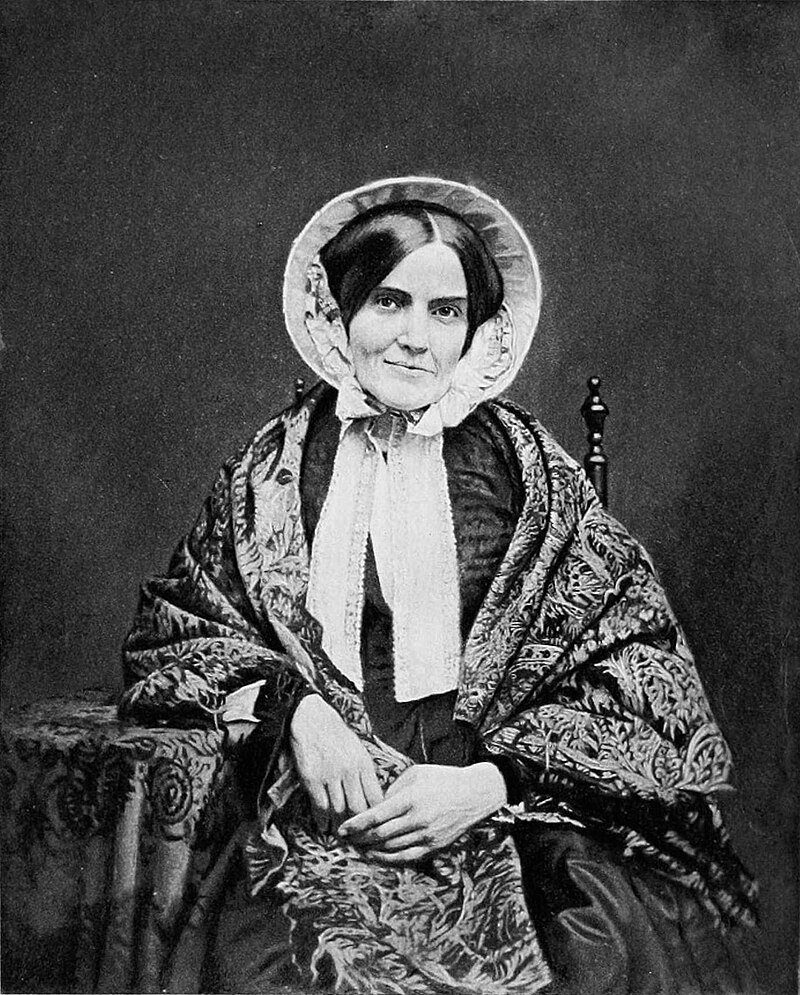
While no image survives of Mrs. L. Dow Balliett, the modern inventor of Numerology, this photograph of her partner and friend, Julia Seton, survives.

Until next time, I’ll leave you with these two alliterative quotations from the mathematician who first outlined the Law of Small Numbers I mentioned earlier. According to Richard Guy, there just aren’t enough small numbers, which leads to false perception of patterns, or as he says, “superficial similarities spawn spurious statements” and “capricious coincidences cause careless conjectures.” And doesn’t that just perfectly describe a lot of the topics I discuss on the podcast?

Further Reading

Dudley, Underwood. Numerology; Or, What Pythagoras Wrought. Mathematical Association of America, 1997.

"An Idle and Most False Imposition"; The Shakespeare Authorship Question - Part Four: "The Truth Will Out"

In 1949, because of disputes over the editorialization of radio news broadcasters during the previous decade, the FCC established a policy called the Fairness Doctrine, which would require licensed broadcasters to devote air time to opposing views on controversial issues important to the public. While this may sound positive, it’s somewhat more complicated than it may appear at first blush. The policy was widely used in the 1960s to silence political speech, as complaints to the FCC about rural broadcasters who could not afford to provide airtime to those espousing counterpoints led in a lot of cases to a general chilling effect on free speech. But when it was repealed, the country saw a surge in biased political speech and misinformation. This was the era in which Rush Limbaugh became a sensation, mostly because the repeal of the Fairness Doctrine allowed his very one-sided program to go national. Limbaugh called any subsequent legislation to reinstate the Fairness Doctrine “Hush Rush” bills. Today, in an age of biased and unreliable news sources pushing conspiracy theory and misinformation, there have been further efforts to reinstate the Fairness Doctrine, but many protest that such a policy could result in the amplification of nonsense, with the notion that opposing views on any topic must be given equal weight. Imagine a world in which programs about the Holocaust would be forced to present the claims of denialists uncritically, when newscasters covering the election would be forced to present conspiracy theories about election fraud as if they had equal weight. The post-truth era would have reached it most terrifying conclusion. And it is certain that the Fairness Doctrine would be exploited in this way. It already was. Before its repeal, Charlton Ogburn, the man who had in the ‘60s and ‘70s tirelessly rehabilitated the Oxfordian Theory of the authorship of works attributed to Shakespeare, had tried to use it to promote his theories, appealing based on the policy for equal time in a certain National Geographic television production on Shakespeare so that he could cast doubt on Shakespeare’s authorship. This notion that anti-Stratfordian views deserved equal footing and consideration on par with traditional historical views about Shakespeare and his works is what lay at the root of his efforts to arrange the mock trials in both America and Britain—that the Shakespeare denialists should be taken seriously, that their views deserved a fair shake. It was thus a devastating blow when in both trials it was determined at the outset that, since anti-Stratfordians were challenging established history, the burden of proof was on them. Because of the general refusal of the scholarly community to grant his views equal weight with consensus views, Ogburn cried conspiracy and cover-up. He claimed that academia was silencing anti-Stratfordians because their theories challenged the status quo, calling it an “academic Watergate.” Again, it was all very much like the claims of Creationists, who wanted religious doctrine to be granted equal footing with scientific principles and cried suppression when they didn’t get their way. Twice in this series I have acknowledged some instances of genuine suppression by academics: when Edmund Malone did not make public a document proving that some of Shakespeare’s works may have been collaborations and when a scholar talked Putnam’s out of printing more of Delia Bacon’s theories. But a vast scholarly conspiracy these instances do not establish. After all, on Malone’s death, another scholar did publish the document, and it must be remembered that Putnam’s had published some of Delia Bacon’s work already, and no one prevented the subsequent printing of her book. The simple fact that Oxfordians managed to get a graduate program established in one school demonstrates that there is no cover up. Rather, there is only a failure on their part to convince the academic world to take their claims seriously, and that is because they reject the burden of proof. In 2007, when Brunel University started its authorship studies program, a document was drafted by Oxfordians and signed by some famous stage actors, Derek Jacobi and Mark Rylance, called the “Declaration of Reasonable Doubt About the Identity of William Shakespeare.” This document, which continues to gather signatures online, focuses not on the case for Oxford, but rather on the case for Shakespeare being the Bard, shifting the burden of proof by claiming that Shakespeare’s authorship is more questionable, and declaring that “the identity of William Shakespeare should, henceforth, be regarded in academia as a legitimate issue for research and publication.” So in the spirit of fairness, we will now lay out, in the clearest of terms, the case for Shakespeare which has so convinced historians that any alternative theories must meet a high bar of evidentiary proof.

There is a reason I bring up the Fairness Doctrine, beyond its connection to Ogburn and his efforts to see Oxfordianism taken seriously. Before this series got started, I had a patron of the program express reservations about the choice of topic. Her comments raised an idea that I think is worth exploring: whether or not a claim that has been debunked again and again is worthy of bringing up and rehashing. This is something I often find myself wresting with because of the nature of my podcast. As I discussed at length in my talk at Sound Education at Harvard Divinity, audio of which you can find in the podcast feed, I don’t think critical thinkers and skeptics should shrink from addressing dubious and false claims, whether wrong or even dangerous—perhaps especially if they are dangerous. Even claims that have already been thoroughly debunked can be further debunked or can have their refutation amplified through further discussion. Most of the topics I have covered have already been thoroughly debunked over and over, like conspiracies about the Illuminati or Templars, but recoiling from covering those topics because we might find them distasteful or problematic or even embarrassing or silly gives misinformation the edge. Those who promote them certainly aren’t avoiding them; they work tirelessly creating content that amplifies misinformation and conspiracy theory. And there will always be people looking these claims up. If they find more material out there promoting whatever false claim has caught their interest, they may be more likely to fall for it. It’s a continual battle in which I feel I’m doing my part by producing content that refutes misinformation. I do, however, understand the views of some in the academic community and the news media that to give any air to misinformation is to strengthen it. I recently had a listener email me saying he was a conspiracy theorist who disagrees with everything I say but listens to the podcast to learn where his favorite conspiracy theories come from. I admit that is extremely discouraging, the idea that despite my greatest efforts, my work might actually arm a conspiracist with some information they can use to convince others. However, I reject the entire notion that if we just ignore these topics they will go away. How many times have we seen something like the Protocols of Zion forgery be debunked over and over yet continue to be touted and spread as if it never was debunked. The promoters of misinformation will likely always outnumber its opponents, so I believe it is important to continually fight it, so that falsehood doesn’t get the final word. Although there are tricky problems with policies like the Fairness Doctrine, I feel it important that there are people persistently making the effort to provide opposing views on unreliable claims. But at the same time, I don’t intend to offer equal time or present such topics as having equal weight. I have always tried to be frank about what is BS and why. And here at the end of my series on the Shakespeare authorship question, I hope to establish once and for all why Shakespeare’s authorship should not and indeed should never have been questioned. 

Charlton Ogburn, influential Oxfordian

First and foremost, we should look at some ways the anti-Stratfordian theories have never and cannot meet the burden of proof. I have endeavored to reveal this throughout the series, pointing out numerous ways their assumptions and interpretations lack merit or have been proven wrong. I am hopeful that it has become apparent that each of these theories rests on far more unproven conjectures than does the authorship of Shakespeare. In order to account for the problems that anti-Stratfordians see with his authorship, we need only reason that some documentation of his life may have been lost or that he simply happened not to leave behind certain personal papers, something that was common of many an Elizabethan. But to support any other candidate, entire vast conspiracies need be imagined. And the nature of the conspiracy, how it worked, is not only unproven but often quite vague. Was William Shakespeare simply a pseudonym adopted by the true writer, and the existence of another by that name a coincidence? Was the pseudonym adopted because of the existence of the actor? In which case, why would the actor allow it? Was some arrangement made, such that the actor by that name benefitted from the arrangement? Anti-Stratfordians all disagree on the particulars, making it nothing more than a set of competing fictions. Since the plays performed by Shakespeare’s companies, Lord Chamberlain’s Men and later the King’s Men, actually belonged to the companies, of which William Shakespeare was only a partial shareholder, early publications of the plays certainly did not enrich him, and since the collected plays were not published in the First Folio until after his death, he did not earn a penny from it. So if this imaginary arrangement did occur, it benefitted the author not at all, and benefitted Shakespeare only insofar as he acquired new plays for his company to perform and perhaps earned himself a reputation as a writer. Most of the theories have it that the true author simply didn’t want to be known as the author, because there was some stigma attached to the art, and yet many of the leading candidates were already known to have been poets and playwrights, so this motive makes no sense. And if the true author sought only to see their works performed and not be credited, it could have been arranged for the plays to be anonymous. Many were the anonymously penned plays performed in London at the time, and many were the plays published anonymously, so just the simple notion that the true author would have to or even want to have someone else’s name put on the works falls apart under closer consideration.

Let us further entertain the notion that not only was it an embarrassment for a nobleman to be involved with playwriting and, to a lesser extent, poetry, but also that there was some hidden and radical message within the works attributed to Shakespeare, which would be further reason for even a gentleman known to dabble in literature to distance himself from the work. This is the argument that some anti-Stratfordians make, such that the true author simply could not risk putting their name on it, so they wanted or needed a front man or fall guy. Even if we swallow all of this, we must consider the risks that both parties were assuming in such an arrangement. Back in 1593, one writer, Thomas Kyd, was arrested on suspicion of producing “mutinous libels,” and was ruthlessly tortured until he informed on other writers, namely Christopher Marlowe, whose suspicious stabbing occurred in the midst of the scandal. This repressive atmosphere suggests that if William Shakespeare were approached with an arrangement to put his name on potentially seditious plays, he likely would have refused, and if there were some other author wanting to hide his authorship, he wouldn’t reveal himself to the man whose name he wished to put on the works, as then his authorship would come out under torture. All of these were unnecessary risks because, again, anonymous plays were common. For some further insight, it is worthwhile to look at what actually happened when a satirical play that had not been anonymously written actually did displease the Queen and her Privy Councilors. In 1597, a play called The Isle of Dogs, in reference to a certain palace where the Queen kenneled her dogs and where the Privy Council met, seems to have satirized either the Queen herself and/or certain of her nobility and was thus declared seditious. We don’t know exactly how it satirized them today, since the play was suppressed, though there are guesses. The Isle of Dogs was a place where river sewage accumulated, so it may be that the play compared the Queen and her counselors meeting there to the excrement collecting there. Alternatively, considering the title, the Privy Council may have been satirized as dogs, the Queen’s dogs, like lapdogs. Regardless, the Council had three of the actors who performed in the play arrested, one of them being a coauthor of the play, Ben Jonson, a close associate and rival of William Shakespeare’s. With an additional standing order to apprehend everyone involved, the entire playing company that put on the play, Pembroke’s Men, had to go on the run for a while. The Isle of Dogs incident had a chilling effect on satire in the theater, such that few playwrights and few companies would risk their livelihoods by staging anything that might seem seditious. This makes it unlikely that William Shakespeare would even put his entire company at risk by staging plays that might have been subversive, let alone that he would want to put his name on such material. By this reasoning, it is entirely unlikely that any of the hidden messages later anti-Stratfordians imagine are hidden in the plays were ever actually intended by their author. If they were, they were so well hidden that censors of the time did not catch them, and neither did audiences, at which point, what would have even been the purpose?

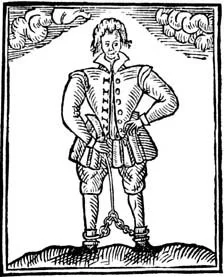
A woodcut of one of the authors of The Isle of Dogs depicted in chains.

Those who argue the authorship of Shakespeare’s plays sometimes suggest there were two Shakespeares, that the Shakespeare of Stratford was not so very involved in London theatrical production, and the person writing plays for Lord Chamberlain’s men was simply using a pseudonym that would cause him to be mistaken for the moneylender from Stratford. As evidence, they look at the spelling of his name on legal documents, comparing them to the name as printed on the published works. The man from Stratford appeared to spell his name with no “e” between the “k” and “s,” making it more like Shakspeare, or Shakspere, or even Shaksper! Whereas on the published works, there is the “e” separating the first half of the name from the second, and often, also, a hyphen, making it “Shake-speare.” A-ha! Evidence that they were different men, the anti-Stratfordians cry. But as was the case with many presumptions about ciphers in the plays, a little knowledge of Elizabethan printing dispels the notion. In the fonts used by compositors of the day, the long “s” or swash “s” could not be placed next to the letter “k,” so the “e” or a hyphen or both were needed to separate the letters. In fact, in one document that ascribes authorship of certain plays to Shakespeare, a record of the performances at Whitehall Palace and the “poets which made the plays,” his name is given as Shaxberd, which certainly sounds more like the spelling he used himself, on, for example, his will. Some anti-Stratfordians take this further, arguing that the variation in spelling even in documents signed with his own hand proves that William Shakespeare was illiterate. After all, he spelled his own name two different ways on his will. But this assertion too rests on ignorance, for it is well known that no clear sense of correct spelling emerged in the English language until the 18th century. Until that time, words and names were largely spelled phonetically. If anti-Stratfordians want to claim that variation in spelling his name meant Shakespeare was illiterate, then that meant other candidates, like Marlowe and Oxford, who also spelled their names different ways, must also have been illiterate.

The flip side of the argument that only someone with access to the royal court and the life of the nobility could have written so convincingly about courtiers and noblemen is the far more convincing assertion that only a member of a playing company could have written the plays for that playing company. The evidence is in the plays themselves. The person who wrote the plays attributed to Shakespeare had intimate knowledge of players in Lord Chamberlain’s Men and was writing plays with exactly the number of important roles for the major players in the company. Since women were forbidden from acting at the time, the author could only write substantial female roles when it was known that a boy actor capable of doing the part justice was available, and the availability of strong boy actors changed as frequently as their voices. More than that, it is apparent that Shakespeare was writing parts with specific actors in mind. It is one thing to imagine that the playwright had the tragedian actor Richard Burbage in mind when creating the characters of Lear and Hamlet, and that he crafted the recurring character of Falstaff specifically for the comedic actor William Kemp, and it is quite another to find actual documentary evidence of the fact, which we have. Although the original manuscripts are lost, some elements of them can still be discerned in early quarto publications and the First Folio, in which, on occasion, stage directions accidentally refer to characters by the actor’s name. There is even a remnant of one performance of 1 Henry IV that indicates an alternative epilogue had been written for the Whitehall Palace performance, in which the author, himself clearly a member of the company, takes the stage to address the Queen and beg forgiveness if she had not enjoyed the preceding play, reciting lines that he specifically says are “of my own making,” and saying that “I was lately here in the end of a displeasing play, to pray your patience for it, and to promise a better.” So it is clear that Henry the Fourth was meant to be the better play he had promised to write when next his company performed for her. What this epilogue appears to support, then, as my principal source, Contested Will by James Shapiro convincingly argues, is that the plays of Shakespeare had to have been written by a member of the Lord Chamberlain’s Men, one who worked with them, a fellow actor, not some nobleman who had died years earlier or who did not wish to be associated with the company, or who worked with some rival company, or who lived abroad in exile. This, of course, eliminates most every other candidate—Oxford, Bacon, Derby, Marlowe—leaving only Shakespeare, who was known to be an actor and shareholder in that company.

Examples of Shakespeare’s signature, showing variation in spelling

As a further example of evidence in the works that indicates the author of the plays was working day to day among the playing company known to perform the plays attributed to Shakespeare, we can look at Shakespeare’s late style. During the last several years of Shakespeare’s life, when under King James his company took the name the King’s Men, the plays they performed adopted a different style, turning from tragedy and comedy to tragicomedy, and a denser, unrhyming style of verse. Much has been made of this evolution of his style, with some scholars claiming it shows his waning interest in making sure his work is accessible to audiences. While this may be part of the explanation, other critics have pointed out that Shakespeare was not the only playwright developing this style in those years, which suggests that it was a developing style of the period. This, then, would again disprove the authorship of Oxford, who had long been dead; Oxfordians would claim that Edward de Vere was writing in very different styles all during the same period, which is harder to believe than that Shakespeare slowly moved toward this style along with his contemporaries. And it was during this Jacobean period that the King’s Men started playing at Blackfriars. This theater was right in London and had previously been drawing large audiences who came to see children’s companies performing tragicomedies. Thus, when the King’s Men began playing there, it made sense to give their audience what they wanted, which were tragicomedies, featuring lots of dancing. It is telling that all the Shakespearian plays that appeared during this period suddenly included lots of dancing. A big part of writing plays was not only shaping the story with the number of parts matching the number of actors, such that the company had enough performers for every character that would appear on stage at any one time, and that actors playing two roles could not play two characters who interacted, but how the actors would exit and enter a scene or descend and ascend from balconies. Plays were written for theaters as much as they were for actors, and this is clearly seen in the plays written to be performed at Blackfriars. The stage was far smaller than others they played, like the outdoor Globe theater, so suddenly the far-ranging sword fights that had been a staple of Shakespeare’s plays are no longer present. With poor natural lighting, long breaks had to be written into the plays so that candles could be trimmed. And since Blackfriars audiences expected constant entertainment, this meant musicians had to be kept on hand to play through the breaks. So lo and behold, in plays from those years, there are far more mentions of musical effects, made possible by the presence of the musicians. All of these elements indicate that the writer of the plays was present, working with actors, blocking the action, orchestrating every particular. And the only candidate known to be working so closely with the playing company was the original candidate, the man who had always been credited with writing the plays, the man no one doubted had been their author for some 150 years: William Shakespeare himself.

Some anti-Stratfordians will act like there is no contemporary evidence of the existence of the actor and acting company share-holder William Shakespeare aside from the name printed on published versions of the play. In their depiction, there is just the few signatures on legal documents in Stratford and the name on the quarto and folio editions of the plays. But of course, there is far more than that. Shakespeare was mentioned by numerous contemporaries as a rising star of poetry and the theater. In 1592, a fellow writer, Robert Greene, called him an “upstart crow, beautified with our feathers, that with his Tygers hart wrapt in a Players hyde, supposes he is as well able to bombast out a blanke verse as the best of you: and…is in his owne conceit the onely Shake-scene in a countrey.” To interpret, Greene was suggesting Shakespeare thought he was better than every other writer, but that he borrowed heavily from them. What’s perhaps more telling, though, is that in his line about a tiger’s heart wrapped in a player’s hide, parodying a line from Shakespeare’s Henry the Sixth, he calls him a “player,” or actor. After his narrative poems were published in 1593 and ’94, the literati begin to refer to him by name, and he starts to even get nicknames, like “Sweet Shakspeare.” A few years later, in Francis Mere’s Palladis Tamia, in a section on English Poets, calls him “honey-tongued Shakespeare,” remarking on his excellence as both a poet and a playwright. This name seems to have stuck, as John Weever, in 1599, writing in a Shakespearian-style sonnet, refers again to “Honey-tongued Shakespeare.” In those same years, an anonymous play called Parnassus appears to show Shakespeare already being idolized to the point of deification in his own lifetime, with characters saying they “shall have nothing but pure Shakespeare,” and that they shall hang his picture up and “worship sweet Mr. Shakespeare.” Even historians recorded his accomplishments, with William Camden in 1605 listing Shakespeare as one of the “pregnant wits of these our times, whom succeeding ages may justly admire.” Not only was Shakespeare credited in certain publications, such as the printing of his narrative poems and early quarto versions of his plays, but even in the private libraries of gentlemen of the era, his name is handwritten in on versions of his works that had been published anonymously. It is quite apparent that the intelligentsia and literati of London knew who he was and knew what he had written. If they had been duped by a conspiracy, it was a vast conspiracy, and no one involved in it ever let the secret slip in any of their own private documents. And as we have seen over and over, vast conspiracies just aren’t believable.

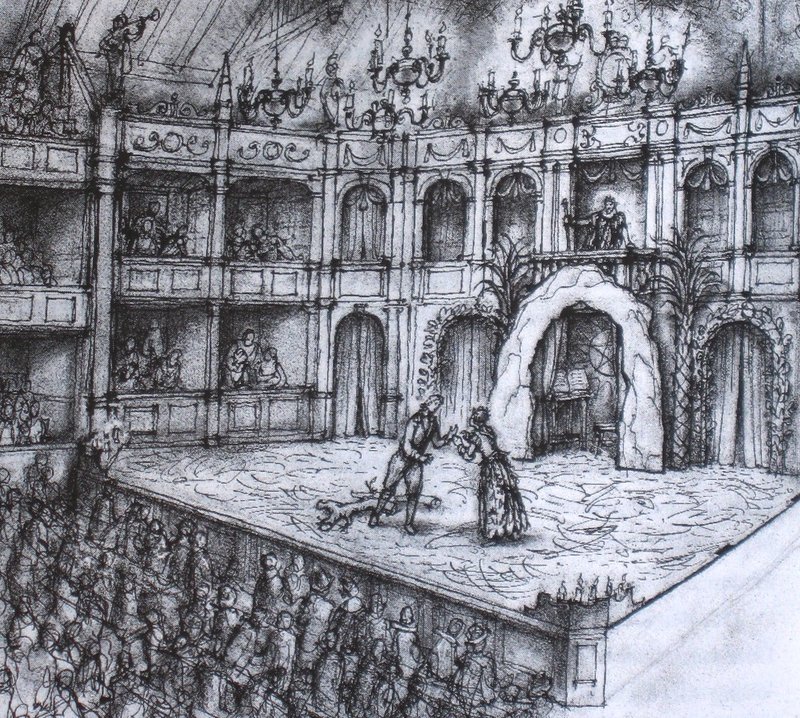
A depiction of the small stage in the windowless Blackfriars Theatre.

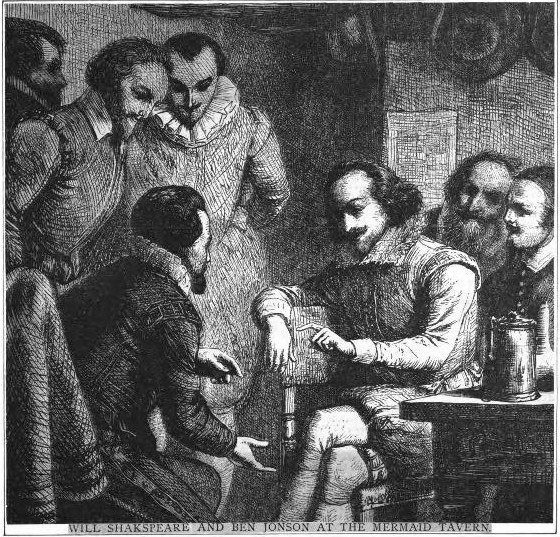
But of course, the anti-Stratfordians only want personal anecdotes, references from those who were close with the man, especially those that can tie him directly to the town of Stratford-upon-Avon, where the man William Shakespeare was known to have lived and died. They claim these don’t exist, but they do. I have already mentioned the anecdotes that establish the fact that the fever Shakespeare died from came on after a drinking bout with the two playwrights Michael Drayton and Ben Jonson. And in fact, the clear evidence that Michael Drayton and Ben Jonson were close friends of William Shakespeare of Stratford-upon-Avon and that they identify this man as the great playwright of London should be the final nail in the coffin of the authorship question. Drayton too was from Warwickshire, and after Shakespeare’s death, he wrote a verse praising his friend by name as being as great “[a]s any one that trafficked with the stage.” Ben Jonson, on the other hand, left behind a more complicated remembrance of the man, as befits two men who were both friends and rivals. Jonson was known to criticize Shakespeare, to call him out when something he’d written was inaccurate or not believable. He once wrote of Shakespeare’s company that “the players have often mentioned it as an honour to Shakespeare that in his writing (whatsoever he penned) he never blotted out line. My answer hath been, would he had blotted a thousand. Which they thought a malevolent speech.” Besides demonstrating that Shakespeare was the writer of this company, and the actors all loved him for his writing, it also shows that Ben Jonson was perhaps Shakespeare’s greatest critic and would likely not have kept the secret that Shakespeare was not in fact a writer but was actually taking credit for the writing of someone else. This is important, because the evidence Ben Jonson provides for Shakespeare’s authorship is so irrefutable that anti-Stratfordians are forced to claim Jonson himself must be a conspirator perpetrating the fraud. In the First Folio, which collected the works of Shakespeare in print for the first time, and which included as its frontispiece a portrait printed from a brass engraving of Shakespeare, Jonson provided both an introductory poem and a memorial verse. In the first, he makes clear that the portrait captures well Shakespeare’s appearance, saying “could he but have drawn his wit / As well in brass, as he hath hit / His face; the print would then surpass / All, that was ever writ in brass.” And his memorial verse, which is called “To the Memory of My Beloved the Author, Mr. William Shakespeare,” he heaps extravagant praise on his friend. And in perhaps the most convincing piece of evidence to identify Shakespeare the playwright and poet with the man from Stratford-upon-Avon, Jonson calls him “Sweet Swan of Avon,” comparing the performances of his plays at the riverside theater, the Globe, with the flights of these birds on the Thames, and finally to the Bard’s final “flight from hence.” It is an astonishing and touching piece of evidence proving that, after all, Shakespeare wrote Shakespeare, and the only way for anti-Stratfordians to contend with it is to splutter that Ben Jonson too must have been in on the cover-up!

Here at the end of our study we should make one thing very clear. The study of Shakespeare’s plays, and who should rightly be credited as their author, is not in and of itself a ridiculous or not worthwhile scholarly pursuit. In fact, there is a long history of legitimate scholarship pertaining to Shakespeare scholarship. Determining which plays were compositions of Shakespeare’s despite having been published anonymously was long a legitimate academic undertaking, as has been searching for evidence of lost works and evidence of source plays that were rewritten as the plays we now recognize, like Love’s Labour’s Won, which appears to have been reworked as All’s Well that Ends Well. During the 18th century, several plays were attributed to him, such as A Yorkshire Tragedy, Sir John Oldcastle, Pericles, and Thomas, Lord Cromwell, all of which would later be disputed as misattributed. Because of this, furthering the parallels between devotion to Shakespeare and religion, we have come to refer to the Shakespearian canon, and everything excluded from it as apocrypha. And much great scholarship has appeared that studies Shakespeare’s collaborative writing. As mentioned in Part One, ever since the emergence of documentation that London playwrights regularly collaborated on their plays, there has emerged an entire field of study on Shakespeare’s collaborations, such that now it is widely accepted that he contributed to Thomas Kyd’s The Spanish Tragedy and Edward III, and Anthony Munday’s Sir Thomas More, that Titus Andronicus was Shakespeare’s revision of a work by George Peele, and that Henry the Sixth was his revision of a play by Thomas Nashe. What sets this work apart from so-called “authorship studies” is that they do not reject consensus scholarship but rather build on it, in an empirical sense. What anti-Stratfordians do is less like empirical historical study and more akin to historical negationism or denialism. If we look at scholarly definitions of denialism, we see a few criteria. It relies on fake experts, and the fact that Shakespeare authorship claims are almost universally raised by amateur researchers meets this criterion. It is selective in its use of evidence, and relies on outlier evidence, and misrepresents facts, and I think we’ve seen that throughout this series. It resorts to impossible expectations of evidence, which I think is true of anti-Stratfordians as well, as one critic in the New Yorker pointed out that they use “an interpretive framework that has an infinite capacity to explain away information.” And most importantly, denialists always fall back on unsupported claims of widespread conspiracy, and we see that here unmistakably. So let’s lose the terminology that has developed around this topic; let us not speak of Stratfordians and anti-Stratfordians, of Baconians, Marlovians, and Oxfordians. Let’s call them what they are: Shakespeare denialists.

 Further Reading

McCrea, Scott. The Case for Shakespeare: The End of the Authorship Question. Praeger, 2005.

Shapiro, James. Contested Will: Who Wrote Shakespeare? Simon & Schuster, 2010.

"An Idle and Most False Imposition"; The Shakespeare Authorship Question - Part Three: Oxford's Ghost

Following the initial failure of the Baconian heresy to convince the world that Francis Bacon was the author of the works of Shakespeare, other candidates began to be named as the potential true writers of the Bard’s great works. The playwright Christopher Marlowe was one. There were, of course, many reasons why it could not have been Marlowe, but for many anti-Stratfordians, who simply refused to consider the notion that Shakespeare, the man from Stratford-upon-Avon, could possibly have written the works, Marlowe too had come from too modest a background to have written the plays. Though Marlowe had written well-regarded plays, and though he had risen from his lower class background to attend Cambridge, and though he even had connections to the royal court, which many continued to believe was a prerequisite for consideration, Marlowe’s connection was rather shady, through the world of espionage. In the minds of many, the true Bard simply must have been an aristocrat, born of high breeding, and so they looked to members of the peerage, earls who seemed to fit their pet notions of what the writer might really have been like. In the early 1900s, while the Baconians were still searching for ciphers and hidden manuscripts, a few noblemen were suggested as the real culprit. One was the 3rd Earl of Southampton, who had long been associated with the Bard because Shakespeare’s narrative poems Venus and Adonis and The Rape of Lucrece were dedicated to him, with the words “What I have done is yours; what I have to do is yours.” This, of course, was rather common language in dedications to lords who had sponsored the works in question. Long had Southampton already been viewed as the person referred to as “Fair Youth” in the Sonnets, but to suggest that he was also the author was simply insupportable. We’d have to imagine him dedicating his own works to himself and expressing love for himself in extravagant ways. It’s rather comical, and therefore was never very convincing. Another candidate was the 2nd Earl of Essex, a favorite of Queen Elizabeth during the later years of her reign, who eventually fomented a rebellion and was executed, a full 15 years before the date on William Shakespeare’s last will and testament. With no literary work attributed to him that could be compared to the great works of Shakespeare, there was little to his candidacy beyond a passing resemblance to the portrait of Shakespeare that appeared on the First Folio edition of his works, so this theory, too, fizzled, only to survive as the watered-down theory that whoever the author was had just used Essex as the model for the portrait. The fifth Earl of Rutland drew more support as a likely candidate in 1907, as he had literary connections and as an ambassador had traveled to the places that it was imagined Shakespeare had personal knowledge of. For example, he had served as an envoy to the Danish court, which his supporters said qualified him to write Hamlet. For Rutland to have been the guy, though, he would have had to write Romeo and Juliet at only 17 years old. Rutland and the others would soon enough be eclipsed by William Stanley, the Earl of Derby, as a favorite candidate. Derby’s initials were the same as William Shakespeare’s, the dates of his life fit, bits and pieces of the plays seemed to have some similarity to events in his life and travels, and according to one report, recorded by a Jesuit spy in 1599, he spent his time “penning comedies for the common players,” and he was known to finance drama companies and even had his own. Why he would write plays exclusively for a rival company of actors could not be adequately explained, however, so the theory never reached Baconian levels of popularity, though it still lingers today. Instead, the next favorite candidate to be credited with the authorship of Shakespeare’s works would be another earl, Edward de Vere, the 17th Earl of Oxford, even though the Oxfordian theory, as it came to be called, suffered from many of the same problems as the cases in favor of these other earls.

In the previous episode we heard about how Baconians are somewhat ashamed of the origins of their preferred authorship theory, since it was dreamed up by a woman who would eventually be institutionalized as insane. Of course, there was much more to her story, and far more contributing to her mental health decline than just her theory regarding the authorship of Shakespeare’s works, which I tried to illustrate in the episode, but it does seem to have been embarrassing enough that works have been forged to pretend the theory did not originate with her. Similarly, the origin of the Oxfordian theory could be considered something of an embarrassment as well, stumbled on as it was by a Looney. To be more precise, his name was John Thomas Looney, though he actually insisted that it was pronounced “low-ney.” I can’t help but wonder if he insisted on that because its pronunciation had led to no small amount of ridicule in his lifetime, and certainly the name has led to similar mockery by those who would heap scorn on Oxfordians. I’m guilty of it myself, just now. Though I actually know someone with the same surname who pronounces it just how it looks, but since the man insisted that it rhymes with baloney, then we’ll say it rhymes with baloney. There was more to John Thomas Looney than just a silly name. He was a schoolteacher, and he was an influential member of the English Positivist community, specifically a member of its Church of Humanity, a kind of secular religion. Positivism was a philosophical movement that is somewhat hard to characterize. It was a 19th century school of thought that valued progress, but far from progressive, in its focus on order as a means of progress, it rejected revolutionary ideas as harbingers of chaos, and thus it was inherently reactionary. This was because its founder, Auguste Comte, had grown up in the age of the French Revolution and detested the disorder and anarchy that he believed was its result. While Comte rejected the metaphysics of religion, he valued the cohesion and order that organized religion engendered, so he and his Positivists sought to use the forms of religion to promote progress and the ideas of Positivism. Thus the Church of Humanity was born, ironically following in the footsteps of French Revolutionaries who converted churches into Temples of Reason. In the Church of Humanity, great leaders and thinkers were worshipped, their busts put in places of honor like idols, and among them was always a bust of William Shakespeare. So the Bard was deified again, but John Thomas Looney, who likely would have become the leader of the Church of Humanity had it not been for a schism and leadership struggle within the movement, would eventually go on to promulgate perhaps the most successful authorship theory, Oxfordianism, in his book “Shakespeare” Identified in 1920, tearing down the idol of Shakespeare once again.

A photo of J. Thomas Looney, originator of Oxfordianism

Looney’s book begins with a careful explanation of how he came to settle on the candidate Edward de Vere, Earl of Oxford, taking pains to present himself as so very open-minded and unbiased, although it is clear that from the outset he believed William Shakespeare of Stratford-upon-Avon could not have written the works. Like others, he asserts that the records we have of Shakespeare’s financial matters just don’t comport with the expansive mind we encounter in the works, insisting the true author could not have cared about money so much as it seems the Stratford man had. That’s right. You heard it here first. Great writers don’t care about money. And it’s not as if the realities of the world force even the most profound thinkers to devote thought to such matters. What he says led him to Oxford was that he found a poem the earl had written that happened to be in the same poetic form as Venus and Adonis by Shakespeare. The stanzas were similarly structured. That’s it. A poet would laugh at this, for not only are the same poetic forms used over and over by many poets, but even a very unique form may be thought up independently by more than one poet. The elements of poetic structure—rhyme, meter, stanza, line lengths—are not fingerprints. But instead of comparing Shakespeare’s poetry to other poetry of the day, or comparing his plays to other plays, or in general just looking further than the first character he came across, he fixated on Edward de Vere, believing that elements of his life story fit well with the man he imagined the author of Shakespearian works to have been. Oxford had been a poet and playwright, though none of his dramatic works survive for comparison to the works of Shakespeare. He was a patron of the theater, with numerous works dedicated to him. He was well-educated and well-traveled, and he had connections to Elizabeth’s court. At the time that Looney was writing, there actually wasn’t much biographical information about Edward de Vere. There was his surviving poetry, some broad strokes about his life, and the occasional offhand remark about him, like the anecdote that Oxford left on his travels out of shame after he “happened to let a fart” in the presence of the Queen, and seven years later, when he returned, Elizabeth reassured him by saying “My lord, I had forgot the fart.” This vagueness with regard to the known facts about de Vere rather helped Looney’s theory, since there was little to disprove it. But there was the troublesome fact that he had died in 1604, before several of Shakespeare’s greatest plays are believed by scholars to have been written. Looney claimed, with no evidence, that Oxford wrote under a pseudonym because writing plays was an embarrassment to a nobleman, and that he had hoarded the plays to be released and performed posthumously. It is true that writing plays was not considered a proper use of a nobleman’s time, but it’s also apparent that people knew de Vere wrote poetry and plays, so who exactly he might have been hiding it from is unclear. And it’s certainly possible for someone’s written work to be released posthumously, but that is not typical of plays, which were collaborated on with the players of each company. The simple fact that the first appearances and performances of the plays attributed to Shakespeare match up with the lifetime of the Stratford man whose name appeared on them would certainly seem to be a clearer point in favor of Shakespeare having been the author.

After the book’s appearance, Oxford very quickly surpassed Bacon as the favorite of anti-Stratfordians. Likely this had a lot to do with how bonkers Baconians had become with their secret codes and conspiracies. The Oxfordians at least had a veneer of scholarly respectability. While Baconians had quite a few very famous converts, Oxfordians too had some big names, the most famous being Sigmund Freud, who came to believe that the plays of Shakespeare simply had to be autobiographical, and that Hamlet was as important an example of his Oedipal complex as had been the tragedy Oedipus Rex. When Shakespeare scholarship revealed that Shakespeare’s father had not necessarily died before Hamlet, in which the character is struggling to come to terms with his feelings about his father’s death, Freud came to doubt Shakespeare’s authorship rather than his interpretation of the play as autobiographical. And when it turned out that Edward de Vere’s father had died when he was young, it cemented for Freud that Looney must be right, for it meant that Freud himself had been right. As Oxford became the subject of ever more research, more facts about his life came to be known, and those who wanted to believe he was the Bard would find no end to the details they could suggest corresponded to elements of Shakespearian works. Characters in the plays became thinly vailed caricatures of his friends and lovers. His wife Anne Cecil was transformed into the inspiration for Juliet, Desdemona, and Ophelia. The one time he purposely stabbed a cook in the leg was portrayed as the basis for Hamlet’s stabbing of Polonius. But more historical and biographical knowledge on the man, as well as on Shakespeare himself, cuts both ways. It was discovered that Oxford had his own company of actors, “the Earl of Oxford’s Men,” so just like the Earl of Derby, it’s quite unclear why he would write plays for some other company of actors to perform. It was learned that Oxford’s marriage to Anne Cecil was disastrous, that he was routinely unfaithful, that he was something of a cad, and that in his final years he devoted himself only to increasing his income. Those who thought him a more fitting personality than the man from Stratford had a rude awakening. And as more was learned about William Shakespeare, more was learned about his sources, such that we know where he took the inspiration for Hamlet’s stabbing of Polonius, from Histoire Traguiques, by François de Belleforest. And we further know that, if proximity to the court of Queen Elizabeth was a prerequisite for authorship, William Shakespeare was actually in the Queen’s presence, performing at Whitehall, more than Oxford was during the 1590s and the early 1600s. Examining the Oxfordian case, it becomes exceedingly clear that all alternative authorship claims are totally subjective, and whatever does not fit one’s favored narrative can be discarded. For example, anti-Stratfordians had long suggested by their biographical reading of the work, that the many sibling rivalries in the plays meant the true author must have had brothers. Well, Edward de Vere did not, and in fact, William Shakespeare had two, one of whom had become a fellow actor in London. Though a clear point in Shakespeare’s favor even by their own reckoning, Oxfordians simply removed that criterion from their litmus so that their pet candidate fit better.

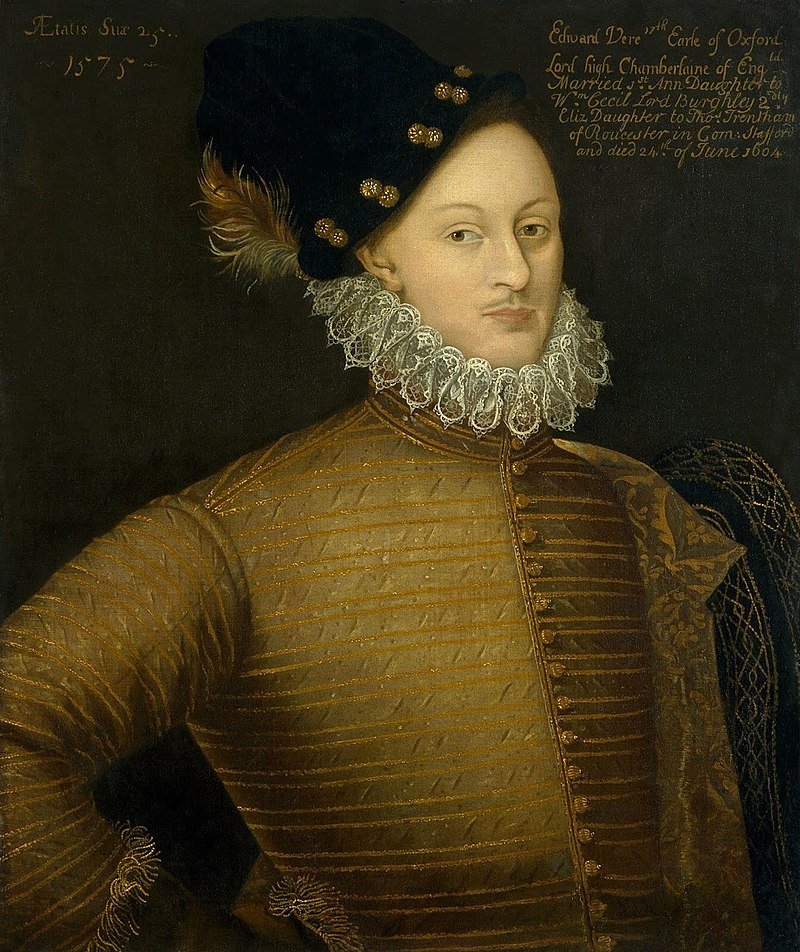
Portrait of Edward de Vere, 17th Earl of Oxford

As Oxfordian literature expanded, the researchers following in Looney’s footsteps began to stretch the limits of credulity in their search for elusive proof, in the process developing wilder and weirder claims and becoming more and more like the Baconian heretics they detested. It started simple enough, in 1923, with one H. H. Holland reading between the lines of plays to suggest they contained allusions to events of the 1570s and 1580s, when Oxfordians held that all the plays must have been written because of Oxford’s pesky death date. In 1931, two separate writers, Montagu Douglas and Gilbert Slater, claimed much as Delia Bacon had before them that Oxford was actually part of a conspiracy, the leader of a group that was responsible for authoring the plays and for orchestrating the imposture of their attribution to Shakespeare. The same year, Oxfordians began to partake in the very technique they had so roundly rejected in Baconian work: cipher seeking. Writers like George Frisbee started to see Oxford’s signature hidden throughout the works of Shakespeare, not exactly in acrostics, but rather in the very common words “ever,” “every,” and “never,” which he claimed, with their combinations of “e” and “ver” were actually the hidden name of Edward de Vere. Unsurprisingly, since just about every piece of English writing has these words, Frisbee eventually started claiming that the works of Chistopher Marlowe, Edmund Spenser, and King James must also have been written by the Earl of Oxford, since those words were in them. In 1937, a Scientific American article made the astonishing conspiracist claim that the Ashbourne portrait, a painting thought to be a portrait of William Shakespeare, had been altered and painted over, a literal coverup to hide Oxford’s identity as the true author of the plays. In fact, the portrait had been tampered with, before it had ever appeared on the art scene in 1847 with claims that it was a portrait of Shakespeare. As later analysis would show, though, it wasn’t a portrait of Edward de Vere. Rather, it had formerly been a portrait of Hugh Hamersley, merchant and mayor of London, as the coat of arms that had been painted over proved. It is believed that the painter who first came forward with the portrait in 1847, Clement Kingston, had altered it, changing the date painted on it, erasing the coat of arms, and scraping off the subject’s hair to make him appear more like other portraits of Shakespeare. Rather than a vast conspiracy to cover-up a historical secret, it was just a forgery, which earned the painter a fair profit. Nevertheless, some Oxfordians continue to claim, without evidence, that the portrait depicts de Vere.

The most absolutely bonkers claim ever made by Oxfordians, one that even embarrassed Looney, was actually advanced a few years before the claims about the Ashbourne portrait. It was first made by Percy Allen, a theater critic and one of the more prolific writers promoting Oxfordian claims in the 1930s. Allen argued that the Earl of Oxford had actually been Queen Elizabeth’s secret lover, and that the queen famous for having been a virgin had actually borne his son, William, who became an actor and used the stage name Shakespeare, a name his father was then using as a pen name. By Allen’s reckoning, this was the hidden meaning behind the Dark Lady and Fair Youth sonnets. Of course, with its echoes of the Baconian folly, in which cipher seekers swore that they had decoded secret messages revealing that Francis Bacon was Queen Elizabeth’s bastard son, the Prince Tudor theory, as it came to be known, was entirely embarrassing to Oxfordians who wanted to be taken seriously as Shakespeare scholars. And it only got worse as the theory evolved, with later writers adding that actually, Queen Elizabeth had borne an illegitimate son before, that her own father had raped her, and that the issue of that assault was actually Oxford himself, so when Oxford then became her lover, it was incest upon incest, with Oxford both Elizabeth’s brother and son, and their child in turn both her son and her nephew. It’s confusing and, frankly, gross, and I think it says a whole lot more about the people who came up with it than it does about the works of Shakespeare. But Percy Allen wasn’t done. Next he turned to a medium, determined that, if he couldn’t find hard evidence in the real world of Oxford being the author, he would seek it from the man’s ghost. Spiritualism, of course, had been a massively influential movement, with many reputable believers, but it should be noted that by the 1940s, when Percy Allen sought to communicate with the spirit world to find evidence of his claims, it was very much in decline. Perhaps unsurprisingly, the medium that he met with, Hester Dowdon, was able to channel not just Oxford, but Bacon and Shakespeare as well, and in their voices told Percy Allen just what he was hoping to hear, that Oxford had written the poems and plays attributed to Shakespeare, and that his works did tell the secret story of his and Queen Elizabeth’s bastard son. Perhaps he would have taken her performance with a healthier grain of salt had he known that that a few years earlier, this same medium had pretended to channel the same spirits to tell a Baconian that Bacon had been the true author. And perhaps all of these anti-Stratfordians would have considered the spiritualist method suspect had they realized that decades earlier another writer had claimed through séance to have proven that Shakespeare was indeed the author of the works attributed to him.

The Ashbourne Portrait, a forged portrait of Shakespeare

With the wilder theories of Percy Allen and others, the Oxfordian movement too went into decline and would not see a resurgence until after World War II. In 1949, the publication of a new edition of Looney’s book in America saw a brief renewal in interest, but it wouldn’t last. Indeed there was more interest in Marlowe during these years than in Oxford. This would change with the entrance onto the scene of a new Oxfordian writer, Charles Ogburn. His first book on the topic was published in the 1960s, and he oversaw a rebirth of interest in the Oxfordian theory during the 1970s and especially the 1980s. Recoiling once again from the outlandish claims and retreating into more scholarly-seeming arguments, he pushed very hard for Oxfordian theories to be acknowledged in academia and for authorship studies to be taken seriously as a legitimate academic undertaking. His arguments echoed the Creationists and Intelligent Design proponents of the same era, arguing that Oxfordian theories were a valid alternative to the traditional consensus view of William Shakespeare having been the Bard, and that schools should “teach the controversy.” In fact, thanks in no small part to Ogburn’s effort, his cause even got their own equivalent of the Scopes Monkey Trial when he orchestrated a mock trial, to be judged by three Supreme Court Justices, Harry Blackmun, John Paul Stevens, and William Brennan. The result of this well-publicized event was not in their favor. They found that anti-Stratfordian arguments did not meet their burden of proof. However, the justices clearly favored the Oxfordian theory over other anti-Stratfordian theories, which was itself a victory, and the trial had the unexpected result of actually boosting the popularity of the notion. Though a second mock trial was held in London and went even more poorly for Oxfordians, back in America, mass media had taken an interest.

First came a piece on Frontline, the PBS documentary series, which made a play for ratings and viewers by asking just the sorts of questions Oxfordians wanted them to ask. Next, favorable pieces began to appear in the Atlantic, Harper’s, and even the New York Times. It was simply too juicy a claim for the media to ignore, which meant Hollywood wasn’t far behind. In 2011, the film Anonymous was released, with Rhys Ifans as Oxford and Vanessa Redgrave as Queen Elizabeth, and directed by Roland Emmerich, of Independence Day fame. Unsurprisingly, the film is far from historically accurate, but then again, maybe we shouldn’t expect accuracy from the filmmaker who brought us Stargate, The Day After Tomorrow, 2012, and recent stinker Moonfall. Along with the boosts provided by mass media and Hollywood, the Internet of course helped to spread the Oxfordian thesis, as it has with so many dubious claims. And in the end, Charles Ogburn and later Oxfordians succeeded where Creationists had failed! In 2001, a University of Amherst Ph.D. candidate received his degree based on an Oxfordian dissertation, arguing that annotations in Edward de Vere’s Bible proved he was the author of Shakespeare—though since that time, further study has shown that the passages of the Bible that Shakespeare seemed most interested in were not even annotated in the Bible, and that the handwriting suggests the Bible was not even annotated by de Vere. Nevertheless, the ironbound doors of academia had been cracked, and in 2007, it finally happened: Brunel University London announced that it would offer the first master’s degree in Shakespeare authorship studies. It is telling, though, that only one other institution of higher learning has created another such program, Concordia University in Portland, Oregon, which was shuttered shortly thereafter when its principal bankrollers, the Lutheran Church, pulled its funding. Next time, in the conclusion to our series on the Shakespeare authorship question, we will finally discuss why the claims of anti-Stratfordians are rejected by academia and are not seen as worthy of their own programs of study.

*

Until next time, remember, when you find out that proponents of a claim had to rely on a séance to gin up support, you can safely dismiss it as false. Seeing as how this was a pretty telltale revelation when it came to the work of Trevor Ravenscroft, author of The Spear of Destiny, maybe we can call this the “Ravenscroft Rule.”

 Further Reading

McCrea, Scott. The Case for Shakespeare: The End of the Authorship Question. Praeger, 2005.

Shapiro, James. Contested Will: Who Wrote Shakespeare? Simon & Schuster, 2010.

"An Idle and Most False Imposition"; The Shakespeare Authorship Question - Part Two: The Baconian Heresy

In 1932, The Times Literary Supplement published evidence that questions about Shakespeare’s authorship had arisen decades earlier than the mid-19th century, when they had previously been thought to have appeared. The paper published was from a small 1805 meeting of the Ipswich Philosophical Society, at which one James Corton Cowell presented the 18th-century findings of a clergyman named James Wilmot, who lived near Stratford-upon-Avon and had conducted some research into Shakespeare. According to this document, the Reverend Wilmot around 1795 had gone in search of books that belonged to Shakespeare and had been surprised to not find any in the private libraries of the area. He had been further unsettled not to find anyone able to offer any clear anecdotes about the playwright. Perhaps this Wilmot should not have thought it so odd, since he was asking for anecdotes nearly 180 years after the man’s death, and more than 130 years after the last of his surviving family had passed away, but regardless, the reverend apparently found this suspicious enough that he decided the Shakespeare of Stratford must not have really been the author of the works attributed to him, and instead, he leapt to the conclusion that it must instead of have been Sir Francis Bacon, who was a true genius and luminary of the same years, and who would certainly have had the knowledge of Court life that it seemed Shakespeare must have had. But Reverend Wilmot was disturbed by his theory, and he burned all of his research, or at least, that is the story that Cowell tells in his paper to the Ipswich Society, claiming that he only knew about Wilmot’s conclusions because the reverend had confided in him. At the time that this document appeared, in the 1930s, this was no revolutionary idea, having been popularized in the middle of the previous century. It certainly was curious, though, that this document came from the collection of a devout Baconian, someone thoroughly convinced that Bacon was the real Shakespeare. Naturally, considering the long history of forgeries related to Shakespeare, this too would need to be authenticated. A biography of Wilmot seemed to confirm that he was who the document said he was, that he did admire Bacon and that he had actually consigned his papers to be burned. However, this biography was written by, it turns out, a forger who would later make false claims of having been born into royalty. Her claims about his burning his papers don’t appear to have been true, and moreover, there was no indication even in this unreliable source that Wilmot had ever conducted research into Shakespeare, nor that he had ever had a meeting with James Cowell. Indeed, no strong evidence for the existence of this James Cowell had even turned up. Curious, the author of my principal source, Contested Will, scholar James Shapiro, examined the document printed in 1932 in The Times Literary Supplement, and based on its use of anachronistic language, its knowledge of details that had not been discovered at the time, and other errors, determined that it was likely a hoax. Indeed, there is a long history to the claims that Sir Francis Bacon was the author of Shakespeare’s works, but not so long a history as this forgery would claim. Just as those who were desperate for some historical evidence to corroborate their conceptions of Shakespeare had resorted to many a forgery over the years, so too have those who are desperate to lend credibility to claims that Bacon authored Shakespeare, because without some earlier proponent of the theory, it is often pointed out that the first person to come up with it had been a mad spinster, also named Bacon.

*

When we hear the term Renaissance, which is a French word simply meaning “rebirth,” we of course think of a time of new ideas in philosophy and new achievements in art, and we typically think of Italy. Indeed, it is often argued that the Renaissance began in Florence, with the writings of Dante and Petrarch and the art of Leonardo da Vinci, Michelangelo, Donatello, Raphael—all the ninja turtles. But of course, the Renaissance was not a strictly Italian rebirth of culture, and elsewhere these developments were seen as well. In England, William Shakespeare is of course counted among the luminaries of Renaissance artistry, as are some of his fellow dramatists, like Christopher Marlowe and Ben Jonson, and other major English poets, like John Milton, Edmund Spenser, and John Donne. On the list the philosophers who contributed to this rebirth in thought in England, you may see many recognizable names, like William Tyndale and Thomas More, but always atop this list you’ll find Sir Francis Bacon. A true polymath, Bacon was a prolific writer on many subjects, from legal treatises, to politics, to history, to the philosophy of education and knowledge, and to natural philosophy or science, in which field he is credited as a forefather of the scientific method. He wrote every kind of thing, from tracts and pamphlets to political reports and parliamentary speeches…everything but poems and plays, funny enough. He served as a counselor to Queen Elizabeth, and later in legal positions under King James, proved himself a formidable statesman as Lord High Chancellor of England. With some questionable charges of corruption in 1621, he lost his positions and was even confined for a time in the Tower of London, after which he retired and passed away a few years afterward. But just as Shakespeare’s star would brighten years after his death, so too would Bacon’s. During the Enlightenment, the French philosophes esteemed him as a social reformer and opponent of dogmatism, and in the 19th century, he continued to be admired. Ralph Waldo Emerson heaped praise on him in much the same way he did Shakespeare, calling him “an Archangel to whom the high office was committed of opening the doors and palaces of knowledge to many generations.” And two mysterious undertakings in Bacon’s career would end up, during Emerson’s time, encouraging his identification with the works of Shakespeare: the first being that he had never finished his work, Instauratio Magna, the “great restoration,” the final, lost part of which promised to be his “New Philosophy,” and the second being that he had once developed a cipher, acting as both a substitution and a concealment code, that allowed messages to be hidden within texts. As you might already imagine, this would lead to claims that his lost philosophy was hidden within Shakespeare’s works.

A portrait of Sir Francis Bacon at the height of his career.

With the claims about Reverend Wilmot proving doubtful, it appears that the first person to not only claim Shakespeare did not write the works attributed to him but also to actually name Francis Bacon as their true author was Delia Salter Bacon, a remarkable Puritan woman—with no relation to Francis Bacon—who had been born in a rustic log cabin in Ohio. After their Puritan community failed and her father, who had organized it, passed away, her brother was sent off to Yale, but she, who was far more intellectually gifted and eloquent than he, had to remain in their Connecticut home and support the family as a schoolteacher. Yet she would not be held back. She began to win short story writing contests, even beating out Edgar Allan Poe for one prize, and soon she was a popular lecturer on history in New Haven. She moved to New York City in 1836 and began to acquaint herself with the intelligentsia there, such as Samuel Morse, who was then engaged in developing Morse code and, as Sir Francis Bacon was a figure of interest to her, spoke with her about Sir Francis Bacon’s cipher. She became involved with the New York theater scene, befriending a famous Shakespearian actress, for whom she wrote a play with decidedly Shakespearian themes. After the failure of this play, she withdrew from society, beginning to develop a theory about the authorship of Shakespeare’s plays that would preoccupy her for the rest of her life. During the years that she was developing this theory, she also became involved with a man, whom she seemed to believe had intentions of marrying her, but when her family confronted him about his intentions, he claimed he had none and began reading their love letters to people he knew, mocking her for her unrequited expressions of affection. Since the man was a theology student intending to become a clergyman, Delia Bacon’s brother actually took him to ecclesiastical court over it, claiming “calumny” and “disgraceful conduct.” The result was that Delia had to testify, their love letters were made public, and the rumormongering became far worse than it ever might have otherwise been. Delia began to lose her faith over the whole affair, and she would never again be connected romantically to another man.

So Delia Bacon withdrew into her studies, becoming more and more convinced of her discovery that Sir Francis Bacon had been behind the works of Shakespeare. She took the famous writer Nathaniel Hawthorne into her confidence, since he too had a family background in Puritanism, and Hawthorne thought her theory had such merit that he introduced her to Ralph Waldo Emerson. The great essayist Emerson too was quite impressed with Delia’s writings, though he expressed his doubts about her theory quite eloquently: “you will have need of enchanted instruments, nay alchemy itself, to melt into one identity these two reputations.” Nevertheless, she was convincing, for she insisted that she had found secret evidence in Shakespeare’s very works, hidden by the Baconian cipher. So convincing was she that Emerson introduced her to Thomas Carlyle, the famed historian and essayist from Scotland, and arranged for Delia to visit England to further research her theory. Of course, fleeing to England to escape the humiliation of her recent scandal greatly appealed to Delia, so she went overseas, where Carlyle actually laughed in her face about her theory, encouraging her to make use of the British Library, where the extensive materials in their collection should disabuse her of her misguided notions. But Delia Bacon was confident that there was nothing in the library to help her. Instead, she spent her time in St. Albans and Stratford, not completing archival research but rather lurking around the tombs of Sir Francis Bacon and William Shakespeare, asking about having their crypts opened because she suspected that some secret proofs of her theory, such as the lost manuscripts, had been buried with them. According to her theory, Sir Francis Bacon, along with a coterie of co-conspirators, had chafed under royal authority, and believing that his New Philosophy, which was essentially a call to throw off the yoke of monarchy for freedom and knowledge, must be directed to the people, he conspired with these others to circumvent censors and embed this philosophy within a series of plays to be put on for the public. The plays themselves proved it, she claimed. Their message about the evils of kings was Bacon’s. Her evidence was much what we have heard already, that there is no record indicating the Stratford man capable of composing the works. She relied on invective, calling Shakespeare a “stupid, illiterate, third-rate play-actor,” while Bacon was exactly the sort of person one would expect to have written them—both completely unsupported claims since there is no evidence of Shakespeare’s illiteracy and in fact ample evidence that he was quite literate, and likewise no evidence that Sir Francis Bacon was capable of composing the sorts of poetry and plays she was attributing to him.

A photograph of Delia Bacon.

Indeed, there are many other problems with the Baconian heresy, as it came to be called, other than these obvious ones. First, Delia Bacon’s entire argument rested on the content of Shakespeare’s plays being secretly subversive political narratives, and as examples she interpreted Julius Caesar, King Lear, and Coriolanus in such a way as to support this view. It is a remarkable work of what would later be called New Historicist literary criticism, but it is too flimsy to support the conspiracy theory she imagines. She ignores dozens of other plays and all of Shakespeare’s poetry, presumably because it would be a Herculean task to try to interpret all of the works according to this perspective. Moreover, even if her close readings of these plays are accurate, that the politically subversive subtext was intended by their author, that does not prove that Shakespeare, the man from Stratford-upon-Avon himself, could not have intended it. Any philosophical notions about freedom or equality or the tyranny of monarchs that Delia imagines must have come from Sir Francis Bacon were also ideas with which the playwright Shakespeare himself could have wrestled. Her presumption that a “play-actor” from a modest background would not be capable of profound thought and could not possibly comprehend royal court life betrays a fundamental misunderstanding of not just Elizabethan culture but also of human nature in her assumption that only people of high breeding could accomplish anything great, a notion that even her own career disproved. Disappointingly, though, the linchpin of her theory, the smoking gun that she always promised her patrons would clinch the argument, that somehow hidden evidence of the conspiracy could be uncovered using Bacon’s cipher as the key, did not appear in her writings when she published. But to be fair, some of her work was lost. She had the first of four essays published in Putnam’s Magazine, but after a Shakespeare scholar called on by the magazine to introduce the essays refused and suggested they not publish any further works of Delia’s—another genuine example of scholars actually working to silence the authorship controversy, which would only fuel the fires of controversy in the future—Putnam’s did back out of their deal, and when they sent the unpublished essays back to her, they were lost. Having no other copies, Delia Bacon was devastated, but she went to work on writing a full-length book on the topic, writing in poverty and anxious to the point of mental disturbance that someone would steal her theory. Indeed, after her initial essay appeared, a man in England printed a pamphlet making essentially the same claim, minus the co-conspirators, and the same year that Delia finally came out with her book, a long and maundering manifesto that again produced no smoking-gun cipher as evidence, this same Englishman came out with his own book. In the end, Delia Bacon’s work was a flop, as she’d feared. She was thereafter institutionalized, having been driven insane by the entire ordeal, and this, in the end, would so invalidate her theory, since it had been dreamed up by a mad woman, that future Baconians have been willing to forge precursor texts just, it seems, to dissociate the theory from its origin.

Despite the initial failure of Delia Bacon’s work, it proved to be something of a cult favorite, surviving not only in her own work but in the references of others, and among the converts to this Baconian cult were, surprisingly, some astonishing luminaries of American letters who would try to validate the Baconian heresy as a legitimate historical view. Already Delia Bacon had major literary figures like Hawthorne and Emerson writing about her in glowing terms, admiring her intellect and insight. After her passing, Hawthorne portrayed her as a tragic figure in “Recollections of a Gifted Woman,” and Emerson called her “America's greatest literary producer of the past ten years.” Even if they did not subscribe to her theory, they certainly were not dismissive of her accomplishments. Soon, though, another major figure in American literature would become impressed by her, and this masterful writer, Mark Twain, would not only subscribe to her theory but also help to promulgate it. Twain had read Delia Bacon’s work, and throughout his career, he found himself drawn to it. Over the course of his own development as an author, he came to believe that all great fiction was by necessity autobiographical, as was his own—Tom Sawyer, for example, drawn from his own childhood experiences in Mississippi. Therefore he was amenable to the notion that Shakespeare must have written his plays from personal experience, and that, since he had no personal experience of court life, the man from Stratford could not have written them. Twain also knew a thing or two about writing personas, as the riverboat pilot Samuel Clemens had not only written under a pseudonym but also cultivated a character to go with the name. So he imagined that he knew something of what Francis Bacon had done in creating the playwright persona of Shakespeare. And there was no shortage of works to encourage Twain in his thinking during these years, as countless anonymous pamphlets and articles in major magazines appeared during the decades after Delia Bacon’s work, picking up where she had left off, crafting clever arguments in an effort to prove her thesis, or some version of it, as well as to challenge it. In 1886, The Francis Bacon Society began to publish their journal, Baconiana, in whose pages the Baconian heresy would be heartily endorsed and fleshed out. Then in 1888, Twain himself published the first major book-length work on the topic since those of Delia Bacon and her plagiarist. This work, The Great Cryptogram: Francis Bacon’s Cipher in the So-Called Shakespeare Plays, was written by Ignatius Donnelly, a Minnesota Congressman who had found fame writing about Atlantis and ancient catastrophes. Today Donnelly is known as a major figure in the history of pseudohistory and pseudoscience. I mentioned him as a precursor to Immanuel Velikovsky in my series on chronological revisionists because of his fringe catastrophist views of ancient history, and certainly I will be discussing him again whenever I get around to tackling the massive myth of Atlantis. It is unsurprising, since Donnelly was obsessed with the idea of hidden truths and historical cover-ups, that he would be drawn to this topic and predictable that he would focus almost entirely on the idea of the works of Shakespeare being secretly encoded. His work would go on to inspire a generation of Baconian cipher seekers who believed they could decrypt secret messages in Shakespeare.

A photograph of Ignatius Donnelly.

Donnelly was no cryptologist, and he went about his work rather backward, imagining what Bacon’s secret message might be and then searching for it in acrostics. The notion that a work might be misattributed and that the true author’s signature might be discerned in an acrostic, taking the first letters of certain words, was not actually a fringe idea. Indeed, within a decade of the appearance of Donnelly’s book, a work long attributed to Chaucer would be discovered to have been authored by one Thomas Usk because of just such an acrostic signature hidden within it. But Donnelly was forced to choose rather arbitrary key words, separated each time by a rather arbitrary number of characters, for his acrostics to work, and he often miscounted purposely in order to make the text fit his preconceived secret message. Donnelly also imagined how Bacon would have had to lay out his pages in such a fashion as to make sure that each keyword was in the right position, but in doing so he betrayed a clear ignorance of how Elizabethan printing worked. These problems would continue to plague all the theories of later cipher seekers, as would Donnelly’s eventual obsession with finding the original manuscripts of Shakespeare’s works. Authorship theorists regularly point to the absence of manuscripts as some indication that the man from Stratford had not written the works attributed to him, despite the fact that manuscripts of plays written for the stage were often not preserved, since plays could be viewed as a performance art rather than a literary art. Remember that Shakespeare’s collected plays would not be published in the First Folio until years after his death. But to cipher seekers, the absence of manuscripts was somehow proof that they contained evidence of the code written into them, and they imagined that Sir Francis Bacon had hidden them away like buried treasure. This is the origin of the absurd notion that Shakespearian manuscripts are buried on Oak Island. Donnelly believed the manuscripts to be buried on Bacon’s estate but could never convince Bacon’s descendants to let him dig up the grounds.

A photograph of Orville Owen.

After Donnelly came Orville Owen, a Detroit doctor, who claimed that he had found some sort of encrypted manual for decoding Bacon’s code, which he had decoded. So he decoded the key to the code he needed to decode, which, as one skeptic pointed out, seemed “like picking the lock of a safe, only to find inside the key to the lock you have already picked.” Owen claimed that the decoded message instructed him to build a device with wheels on which he would lay out Shakespeare’s plays and spin the text past his eyes in such a way that keywords would jump out. As with Donnelly’s arbitrary selection of keywords, though, Owen baked into his conception of the code much laxity, in that when he found a keyword, it would be possible to find the actual encoded terms or phrases several lines away, giving him great swathes of text in which to find whatever he wanted to find. His assistant in this work, Elizabeth Gallup, would eventually become a rival, believing that Bacon had also woven in a biliteral code through his use of two distinct fonts. Owen’s and especially Gallup’s theories both suffered from the same problem as Donnelly’s in that they depended on the notion that the plays’ author had been closely involved with the actual printing work performed by compositors, but Gallup’s theory specifically would later be entirely disproven when it was pointed out that Elizabethan compositors typically worked with trays full of lots of different typefaces, explaining the variation in font that she suspected was a code. The codes that Owen and Gallup believed they were uncovering led them to pretty outrageous conclusions; according to them, the plays’ cipher revealed that Sir Francis Bacon was really Queen Elizabeth’s son and thus heir to the throne! And Gallup’s nonexistent biliteral code took it a step further, revealing that within the plays were encoded other lost plays of Shakespeare that told the history of Elizabethan England, including tragedies about Mary Queen of Scots and Anne Boleyn, both of which I’d have loved to read. Unfortunately, Gallup only provided summaries of these plays she had supposedly found buried within other plays—taking the idea of a play within a play to absurd heights. Eventually, their decipherment led both Owen and Gallup to the location of the hidden Shakespeare manuscripts: Gallup’s code sent her to North London and Canonbury Tower, while Owen’s took him to the bottom of the Severn River. Unsurprisingly, neither of them found a single page.

Throughout the twilight of Twain’s career and lifetime, a number of other books were released on the topic—Francis Bacon Our Shake-speare by Edwin Reed in 1902, The Shakespeare Problem Restated by George Greenwood in 1908, and in 1909, the year before Twain’s passing, he had the opportunity to read the prepublication galleys of a new book making further claims about Baconian codes in Shakespeare, called Some Acrostic Signatures of Francis Bacon, by William Stone Booth. By the end of his life, Twain had become thoroughly convinced that Shakespeare could not have written the works attributed to him, his conclusions leaning heavily on the fact of the sparse biographical records of the man, saying, “He is a Brontosaur: nine bones and six hundred barrels of plaster of Paris.” Nor was Twain alone among his literary contemporaries in succumbing to the Baconian authorship theory. Walt Whitman, who loved the idea of the mundane world being infused with some mystical secret, wrote the poem “Shakespear Bacon’s Cipher,” which begins with the words “I doubt it not.” And Twain’s close friend, Helen Keller, who had once written “my Shakespeare was so strongly entrenched against Baconian arguments that he could never be dislodged,” would eventually propose to write a book of her own in support of those same Baconian arguments—something she thankfully never did. As for Twain, so preoccupied was he with conspiracy claims about Shakespeare that he tried to come up with a few similar such theories himself, arguing at one point that The Pilgrim’s Progress could not have been written by the preacher John Bunyan and must instead have been authored by John Milton. At one point he even tried to argue that Queen Elizabeth was really a man, because no woman could have accomplished what she did. At the end, the Shakespeare authorship question had become such an obsession that he made it the subject of his final work, which he called Is Shakespeare Dead? In it, he plagiarized an entire chapter from another writer, lifting a whole section about Shakespeare’s apparent knowledge of the law from another book that he failed to credit. So at the end of his illustrious career, the Shakespeare authorship controversy led him to folly and scandal. As James Shapiro points out in my principal source, Contested Will, Twain seems to have plagiarized that section because it makes a convincing case that Shakespeare could not have had the legal knowledge that the author of the plays displays. As Shapiro puts it, Twain borrowed the material “to challenge Shakespeare’s claims to authorship, on the grounds that you had to know something about law to speak with authority about it. Yet in doing so, Twain does what Shakespear himself had done: appropriate what others said or wrote, using their words to lend authority to his own—something that Twain had argued wasn’t possible.” Shapiro goes on to note the further irony that Twain believed Shakespeare to be illiterate because he left no books behind, yet after his own death, Twain’s own book collection was immediately sold off by executors looking to make a quick profit, much as might have been the case with Shakespeare’s library. In the end, with no convincing evidence of a cipher, no lost manuscripts, nor any compelling evidence to show that Bacon wrote any plays, let alone that the language of Shakespeare’s plays could be likened to his known work, the Baconian heresy faded, only to reappear far later with the advent of History Channel nonsense that the conspiracy-addled Internet. But the authorship controversy would not fade. It merely needed a new candidate, and it turned out there was no shortage of them.

 Further Reading

McCrea, Scott. The Case for Shakespeare: The End of the Authorship Question. Praeger, 2005.

Shapiro, James. Contested Will: Who Wrote Shakespeare? Simon & Schuster, 2010.